Over the past four years, we’ve focused intently on clarifying our identity—who we are, what we stand for, and why we do this work. During this time, there are two ideas that continue to shape our journey: praxis, the continual cycle of reflection and action, and felt difference —the tangible ways individuals and communities can feel the changes our systems and institutions claim to be making. As I reflect on what’s happening in our community and across the country, I’m more convinced than ever that these two ideas should ground our work.
Praxis calls us to pause, listen, reflect then take action—not just when it is safe, but when it is difficult and uncomfortable. Especially for those of us who have the privilege of leading in and within companies and communities, praxis pushes us to resist the ease and security of neutrality or safety. This means pausing and interrogating our own systems and the spaces we inhabit first, maintaining a hyperfocus on using our own spheres of influence to do the most good.
Over the past few months, I’ve met with leaders across the country who are doing this work, reckoning with massive disruptions, systemic failures, and the sobering realization that the most vulnerable among us continue to bear the brunt of our crises. From wildfires to government instability, these communities aren’t just navigating loss—they’re doing so while facing narratives that at best, dismiss their needs but often question their very worth as humans. And yet, within the heaviness, there is movement. There is organizing. There is hope. As we support and take action, felt difference reminds us to keep asking: who can feel the shift—and who still cannot? Whose voices or perspectives have we not heard? How are we making decisions that center those voices?
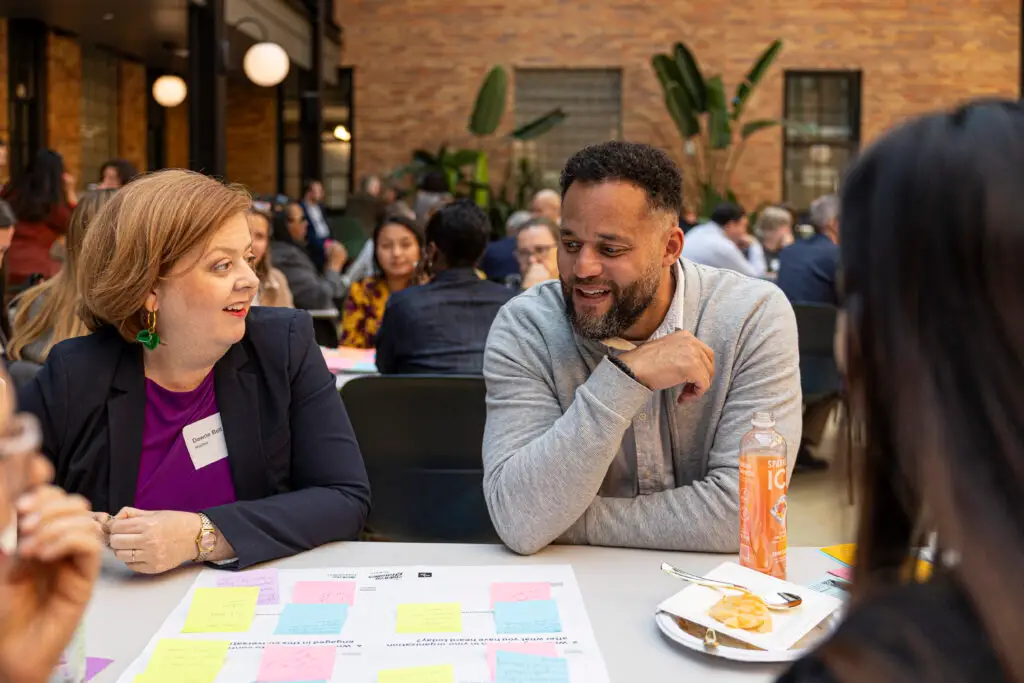
Here in Grand Rapids, these questions drive our work with community partners. Some are doing this work quietly, to best protect and preserve their efforts to support those most vulnerable to further distress, while others have the privilege and protection to take action more publicly. To the organizations welcoming refugees, defending immigrant rights, providing essential services, and organizing for change, we thank you and stand with you. Your work challenges us to go beyond programmatic checkboxes and toward deeper, long-term relationships rooted in solidarity. Helping us see how felt difference shows up not only in outcomes but in how people feel when they enter a space: do they feel safe, seen, valued, and supported?
This is not abstract work. It’s tangible. Together West Michigan’s organizing efforts are beginning to build momentum across faith traditions for structural policy shifts by centering the lived experience of our neighbors. The Michigan Immigrant Rights Center continues to pushback against unjust systems while ensuring families have access to legal protections and dignity. Samaritas’ wraparound services are not just stabilizing lives—they’re building pathways for families to thrive. And the Refugee Education Center is creating spaces where children and parents alike are reclaiming their power through education and community.
What is happening is not normal; we must invest in and support both the builders and the fixers in this moment. What does it mean to invest not only in programs but in people—in the organizers, the storytellers, the bridgebuilders? How do we sustain? I recently read about a choir metaphor that’s stuck with me: a choir holds a sustained note by taking turns breathing. No one voice carries the weight alone. That is our call right now—to sing when we can, to breathe when we must, to reflect and to make sure the music continues.
Thank you for walking alongside us, for helping us build a future where felt difference is not just a measure but a movement—one where people know, in their bones and in their daily lives, that change is not only possible, but already happening. As Dr. King so powerfully reminded us, “Power at its best is love implementing the demands of justice.” That is our charge. Let’s continue to move boldly toward that vision, with courage, clarity, and care.
In community,
Daniel Williams
President