In 2025, the Steelcase Foundation provided KConnect a three-year $300,000 grant to support its Common Agenda Road map 2.0, which provides a shared vision and goals for Kent County’s collective impact work. Hear from President and CEO Salvador López as he shares insights into this work.
Name and role with the organization.
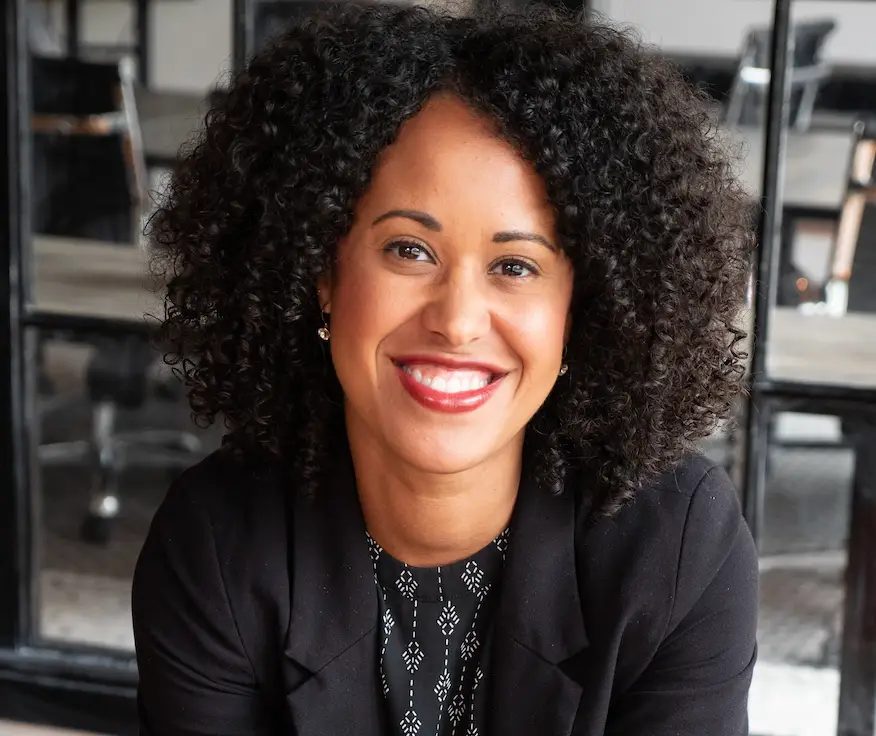
Salvador López, President and CEO of KConnect.
Brief overview of your organization and what you do.
KConnect is Kent County’s collective impact backbone organization. Our vision is a future where every child and family has the opportunity and support to thrive, no matter where they start. Our mission is to connect people, organizations, and data to mobilize collective action for lasting systems change.
KConnect started in 2013 through conversations among local leaders, and we’ve grown into a network that now reaches beyond Kent County into Michigan and across the country. What sets us apart is that we don’t run programs. We use data and community voice to connect existing systems. Our work covers the full prenatal-to-career journey, guided by eight success measures our network developed and 27 indicators we track against them.
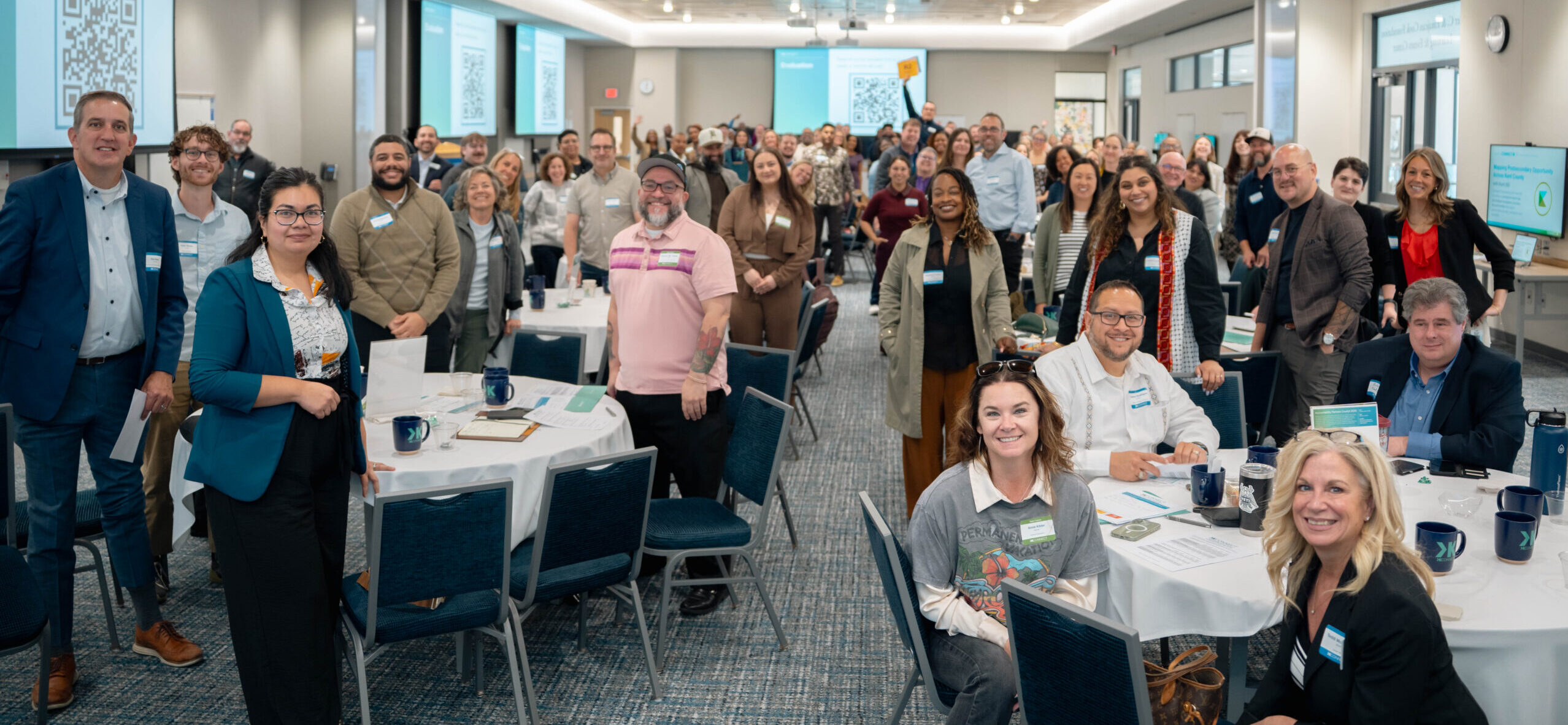
In practice, that means convening partners through workgroups and action teams, with the full network coming together at our annual Accountability Partners Council convening. We maintain a public Data Dashboard, and we facilitate strategy design when the community needs to address a systemic issue. Our approach draws on the idea that it’s better to dissolve a root problem than to keep solving it. If you only treat symptoms, you’ll be treating the same symptoms for ten years, twenty years, and so on.
Tell us about the Common Agenda and Road Map 2.0. What are some of its goals, and how does this work further efforts to support children and families in Kent County?
First, what we call a Common Agenda and Roadmap is what most organizations call a strategic framework. The language comes from collective impact, where a common agenda means many organizations share a vision and goals rather than one organization holding them. It does the same job as a strategic framework; it just has to work across a whole network rather than a single organization.
KConnect published its first Common Agenda in April 2013. It served us well, but by 2022 we saw its limits. It articulated a vision without giving the network actionable steps. It was theory more than operating instructions. We needed a refresher as an organization, and our team was different than when the organization first started.
So, we started by listening. More than 30 community leaders and longtime partners participated in focus groups in early 2023. They told us what was working and what wasn’t. Six themes emerged from those conversations, each naming a real tension we needed to sit with and address. Those themes became six high-leverage activities:
- Launch system-level strategies that eliminate racialized disparities from prenatal-to-career
- Develop a shared policy agenda and operationalize advocacy
- Embed community voice throughout KConnect’s structure
- Empower the Backbone to hold decision-making authority
- Ensure sustainability by diversifying funding
- Increase and better leverage private sector partnerships
For children and families, the practical effect is coordination. Before KConnect, education, human services, government, philanthropy, and grassroots organizations in Kent County all worked hard on the same problems but rarely collaborated. Results stayed isolated and were hard to scale. The 2.0 gives partners a shared vision, shared measures, and a shared place to bring hard problems. Families don’t fall through the cracks within a single system: they fall through the space between systems, and nobody owns that space. The 2.0 is helping us be creative about how our partners can jointly own the work in these spaces.
Are there any highlights you’d like to celebrate related to the core initiatives?
Yes, we have a few that we’re especially proud of.
A shared policy agenda includes the voices of community members who have historically been left out of the process of building one. This was the second high-leverage activity, and it moved the quickest. With Dr. Shayla Young’s leadership, we convened subject matter experts and network partners, built KConnect’s first Shared Policy Agenda, and brought it to a Policy, Advocacy and Community Engagement (PACE) convening where partners discussed and affirmed it. We then set up a PACE function under the KConnect agenda, giving it a permanent home so the work can be updated as needed.
We pivoted by leading with our Align & Design Teams (action teams) to do real system work. The first activity called for system-level strategies that eliminate racialized disparities across the continuum. Our Youth Justice Align & Design Team recently released a Youth Justice Community Brief laying out a continuum for young people in Kent County, and we’ve launched an early childhood leadership table. We’re also organizing a fishbone analysis around 8th-grade math proficiency, because an indicator like that sits at the intersection of a dozen different systems and no single institution can move it alone.
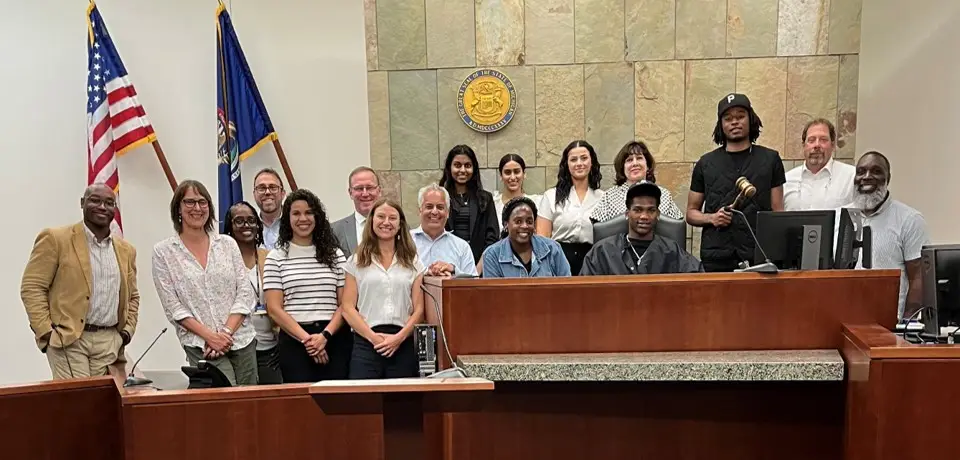
Out-of-school time: Working alongside the Expanded Learning Opportunities (ELO) Network, facilitated by Our Community’s Children (City of Grand Rapids), we’ve aligned efforts to increase awareness on OST funding, and developed the “OST campaign” -inclusive of parent, youth, and educator voices. Two convening groups who could have run parallel efforts chose to collaboratively approach advocacy. Recently, Michigan made its largest investment into out of school time with a $135 million allocation in the 2026-2027 School Aid budget (Section 32n). These dollars are available through a state grant to support youth serving OST organizations across Michigan, including many partners of the ELO Network.
Community voice: The Community Engagement (LivedPay) ebook, the updated Compensation Structure, and the Youth Compensation Structure all landed under the 2.0. These resources plainly highlight that people who share their lived experience should be paid for it, and they’ve changed how other organizations in the county approach engagement.
New reach, new revenue: The fifth and sixth activities pushed us to diversify funding and take a national lead. There is a lot of power in ensuring that Kent County is front and center, but in policy work, Kent County can only move as fast as the state, or even the country at times. To give ourselves some flexibility, we launched ConnectUs, a consultancy that brings collective impact practice to other communities, and we’re now facilitating statewide and national work while staying rooted in our community. The goal is to bring ideas, resources, and mental models from other communities back here, to Kent County.
All of this rests on the decade that came before it, including the prenatal work that led to Doulas of Color, a housing system redesign that became Housing Kent, and K-12 partnerships that supported rising high school graduation rates in districts facing the most significant barriers. It helped that we had close to seven years of experience before we built on the first framework, though, to be honest, I would have preferred we started sooner.
How does this work align with the Steelcase Foundation grantmaking priorities of Defending and Strengthening Public Education, Whole Child Learning, Whole Family Supports, and Postsecondary Access & Success?
Closely. We align by centering children and families, and we’ve been building toward many of the same outcomes.
The Steelcase Foundation and KConnect both believe in strengthening public education. Our Workplan tracks positive transitions across the prenatal-to-career continuum, and our data work gives districts and partners a disaggregated picture of where students are falling through the cracks. Our youth justice work is fundamentally about keeping young people connected to school and community, rather than pushing them out of both. Often, supporting children means looking beyond the school day, and I think we both see the value of a variety of supports that need to align with educational systems.
On whole-child learning and whole-family supports, our early childhood leadership table and our out-of-school time work with the City of Grand Rapids and Kent County are directly aligned with this work. We’ve also invested in making sure immigrant and Spanish-speaking families can see and use community data. Data can only describe so much, and if we’re not careful, the narrative can even harm historically underrepresented communities. Ensuring full stories are understood is embedded in the quantitative information we share.
On postsecondary access and success, our continuum doesn’t stop at graduation. College enrollment and persistence sit among the indicators we track, and our network includes the higher education partners who own that transition.
The Foundation also commits to centering the wisdom, leadership, and lived experience of the communities it serves. That is what our third high-leverage activity asks of us, and it’s the aspect we take most seriously.
What do you hope is the lasting impact of KConnect and its Common Agenda Roadmap?
I hope that our work helps improve the lives of children and families, regardless of their starting point. I hope we can sit down five or ten years from now and talk about how far ALL of our communities have come. The framework and the work we do play a role in that, and I hope we continue to take our responsibility seriously, keep listening to the people closest to the work, and not give up, regardless of the challenges in front of us.
Beyond outcomes, I hope we can inspire people and organizations to approach systems work creatively. I hope that looking at data continues to raise the important questions that need asking; that honoring people with lived experience and making room for them in every room becomes common practice; that when a hard problem shows up, leaders across sectors reach to each other instead of retreating into their own organizations. Those habits will outlast any document, including this one.
Is there anything else you’d like to lift up about this work?
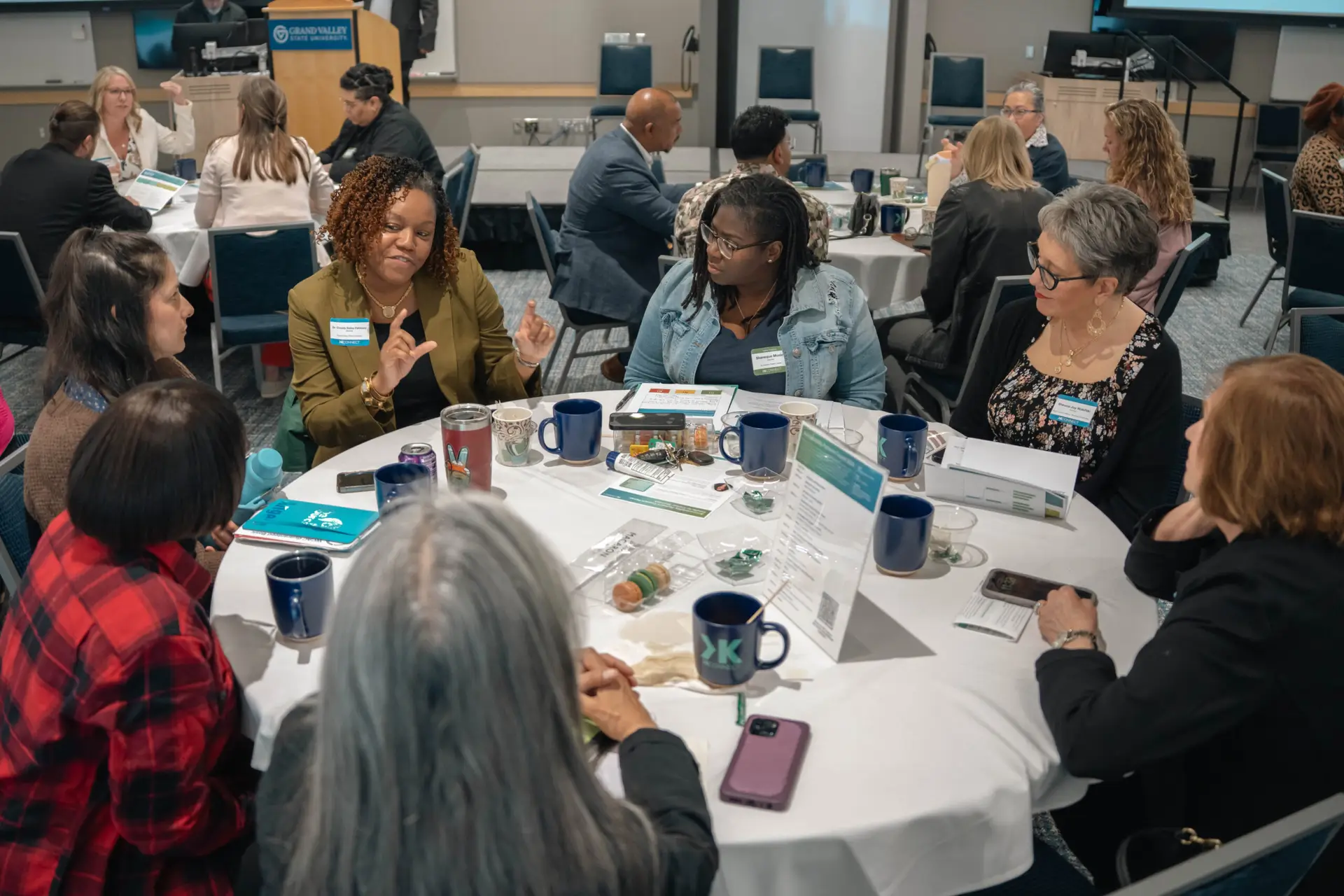
The work KConnect is doing requires support and alignment from many. Collective work only functions when hundreds of people decide, over and over, to stay at a table where progress is slow, and credit is shared. Our network members have made that choice for more than a decade. They are the reason this work has legs.