In June of 2026, the work of Venessa Kirkwood, a family leader in the Steelcase Foundation Investment in Families Initiative, was featured in Crain’s Grand Rapids Business. Below is her incredible story.
Commentary: Steelcase Foundation Research Project Brings Childcare Stability for Working Mothers
There is a version of a mother that the world sees: composed, capable, carrying it all with a smile. Then there is the version she knows: the swollen feet at the end of a double shift, the headache born of sleeplessness, the grief of shelving her own dreams so her children’s can take root.
I am both of those women. Most working mothers are.
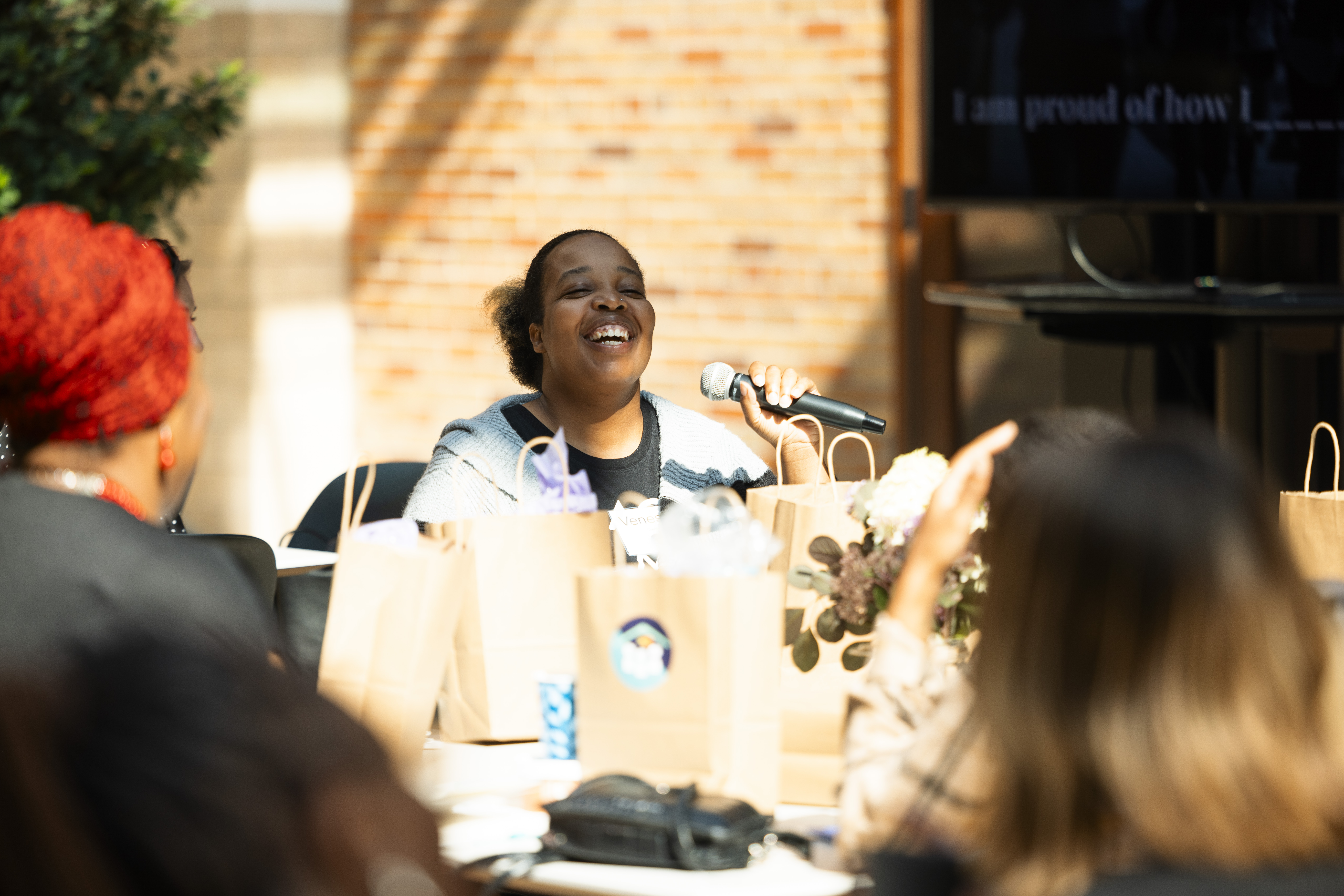
In my community, the old model of family — two incomes, shared responsibility, a safety net formed by two adults — is a fairy tale. Today, in households like mine, the mother is the breadwinner and the family leader. She manages the bills, packs lunches, shows up to work, and somehow tries to hold herself together, too.
The numbers confirm what mothers already know. Full-time working mothers earned 35% less in wages than fathers in 2024. If left unchanged, this gap could amount to roughly $600,000 less over a lifetime of work. Meanwhile, mothers in a single-income household faced an unemployment rate of 6.1 percent in 2024, compared to just 2.4% for married mothers; a reminder that family structure and financial vulnerability are deeply intertwined. And the isolation? A 2025 survey found that 70 percent of mothers say motherhood is lonelier than they expected, with one in five feeling lonely every single day.
Childcare is where the whole system buckles. I rely entirely on my mother to care for my children while I work. It is not her responsibility, nor is it the ask I want to make of her, but since I can’t afford childcare, it gives me peace and space to work. I’ve shaped every job decision around my children’s schedule and my mother’s availability. I worked nights so she could carry less of the load during the day, though my children complained that I slept through their afternoons. I declined jobs that paid more because the hours didn’t align with who could pick up my kids. Every choice is a compromise I never should have had to make.
Mine is not an unusual story. Fifty-four percent of mothers say childcare is unaffordable, and among Millennial and Gen Z mothers, half have considered leaving their jobs because the cost and stress of childcare outweigh their earnings. The costs are astronomical for families who earn too much to qualify for state assistance but too little to pay on their own.
This is precisely the problem the Steelcase Foundation’s Investment in Families Initiative is trying to address. Not with charity, but with trust.
Launched in 2024, this 10-year participatory research project follows 30 mothers in Kent County, centering our voices in an effort to change the systemic barriers holding families like mine back. Each family receives financial support, resources, and most importantly, a community that understands one another. The foundation trusts and recognizes that mothers know what their families need, and that stability itself is a form of transformation.
For me, it has been exactly that. Being part of this initiative has given me what I can only describe as a security blanket: the grace to stop guessing whether next month’s needs will be met. That stability has also created something surprising: space to think about me. To focus not just on survival, but on purpose. It has not eliminated the weight of being on my own, but it has strengthened my belief in myself. When you are not burning every ounce of mental energy just to stay afloat, you begin to dream again.
That is what employers need to understand: we are at our best when our children are cared for. Not just tolerated but genuinely supported.
Small shifts in the workplace can matter enormously. Schedules that allow a mother to drop her kids off at school before clocking in. Affordable childcare with hours that reflect the reality of working parents, not just a nine-to-five assumption. In December 2024 alone, 1.3 million workers, 89 percent of them women, either worked part-time or missed work entirely due to childcare problems – a 22 percent increase over pre-pandemic levels.
Mothers are not asking for special treatment. We are asking for a system built with us in mind.
Mothers are the pulse of their families and their communities. We are raising the next generation of leaders, and we are doing it while working two jobs, negotiating impossible schedules, and running on too little sleep and not enough trust or support. What the foundation understands, and what the rest of our institutions are still learning, is that investing in mothers is not wasteful. It is tangible infrastructure.
I hope Grand Rapids will ask itself: what would change if we truly believed that? What should our workplaces look like? Our childcare systems? Our communities? Mothers already know the answer. It’s time to listen.